
Palau’s Reefs at a Crossroads: Balancing Economic Needs with Marine Conservation and Climate Adaptation
by Yuwei Wu
Abstract
This paper evaluates the current status of Palau’s coral reef ecosystems, analyzing both the environmental threats they face and the innovative strategies implemented for their preservation. Palau is home to some of the world's most diverse and resilient coral reefs; however, they remain vulnerable to global climate change, Crown-of-Thorns Starfish (COTS) outbreaks, and local overfishing. The study examines key intervention measures, including the establishment of the Palau National Marine Sanctuary (PNMS), the implementation of the legally binding "Palau Pledge," and the pioneering "Super Coral" selective breeding program by the Palau International Coral Reef Center (PICRC). While these initiatives demonstrate significant promise, the paper further discusses critical challenges, including recent political debates over expanding commercial fishing zones and the biological limits of coral adaptation in a warming world. The findings suggest that while Palau serves as a global model for marine conservation, local efforts must be supported by global carbon emission reductions to ensure long-term reef survival.
Introduction to the Reefs of Palau
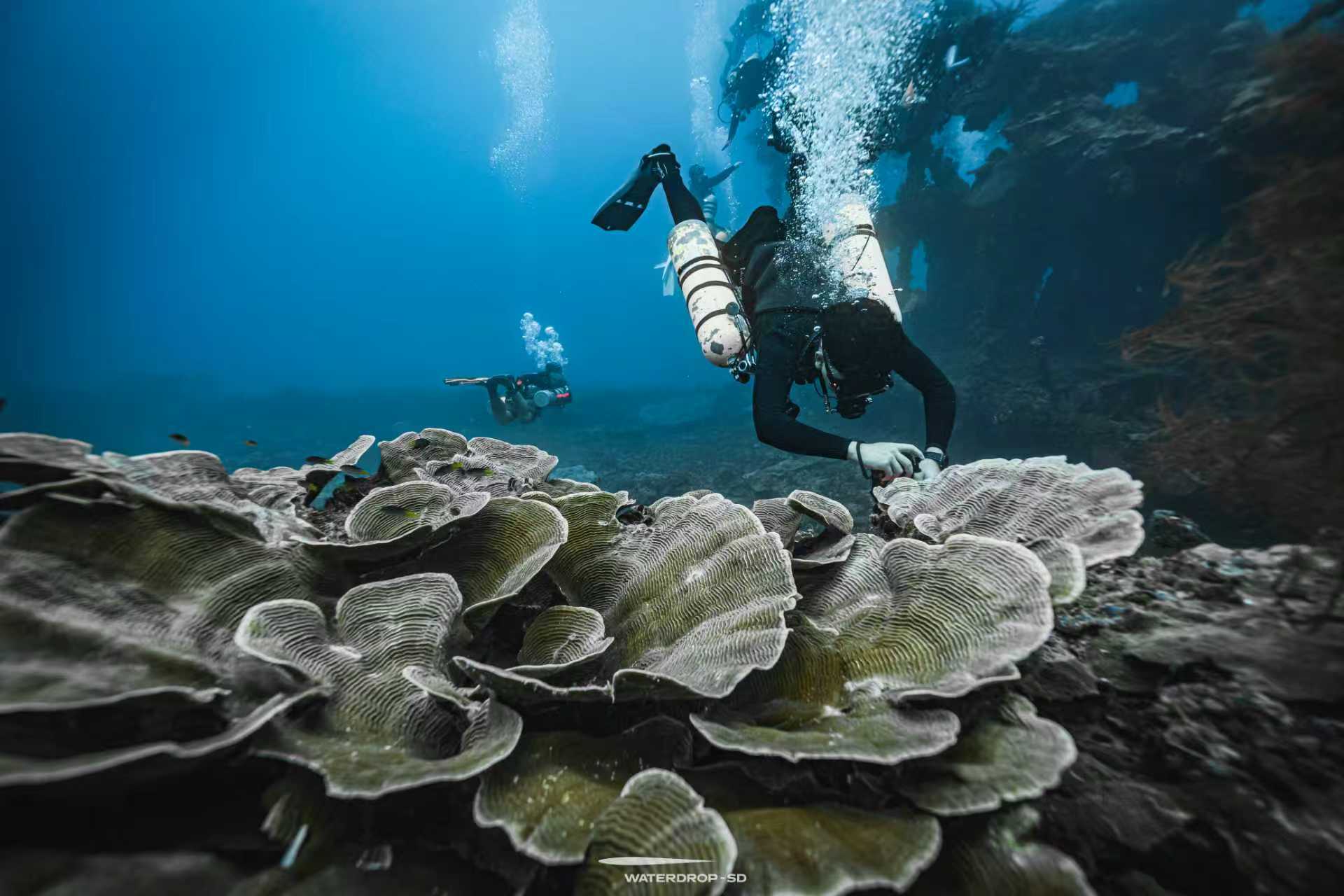
Coral reefs are under threat globally due to a variety of factors, including climate change, bleaching, overuse and over fishing, and coralivore outbreaks such as those of the Crown of Thorns Sea Star. Despite this widespread instability, the reefs of Palau are rich in abundance and diversity, lying just outside the so-called ‘Coral Triangle’ region (Colin et al., 2008). Specifically, Palau is home to some of the most diverse coral reefs in Micronesia, hosting approximately 425 coral species, 1700 fishes, 302 molluscs and 234 species of crustaceans (ICRI 2024).
Notably, unlike many other reef systems globally, such as the Great Barrier Reef, Palau’s reefs have demonstrated remarkable historical resilience. Since the major bleaching event of 1998, Palau has largely avoided mass coral mortality despite rising ocean temperatures. This unique characteristic has positioned Palau as a global "living laboratory," where scientists are studying why these specific corals are naturally heat-tolerant to apply these lessons to other endangered reefs.
However, the region is not immune to environmental pressures. Threats to the reefs of Palau include Climate Change, Bleaching, overfishing, and coralivores such as Crown of thorns sea stars, drupella, bump head parrot fish. It is worth noting that while coral disease is a growing threat to reefs globally, especially those of the Caribbean (Morais et al., 2022), it is not identified as a major threat to the reefs of Palau in recent years. This is supported by studies finding few instances of disease on the island's remote reefs (Colin et al., 2008).
In contrast to the low prevalence of disease, the populations of Crown Thorns Sea Stars (COTs) have increased greatly over the last few decades, becoming one of the leading causes of coral loss in areas of the Indo-Pacific (Deaker & Bryne 2022). Furthermore, because of COTs’ breeding and surviving ability, they may have outbreaks in the population and cause significant disturbances to reef systems (Deaker & Bryne 2022).
The coral reefs of Palau were greatly impacted by the global mass coral bleaching event of 1998, with some reefs still not showing major signs of recovery decades later (Colin et al., 2008). Simultaneously, the populations of COTS have fluctuated over time in Palau, coinciding with approximate 15-year outbreak cycles as observed in other studies (Deaker & Bryne 2022). Although Palau has often been cited as a study site for the outbreak of COTs, studies in more recent years (Colin et al., 2008) have not shown them to be in outbreak abundance. This trend of low abundance was also observed on the study trip in December of 2025 by the author.

Implementation of the Marine Protected Area
In response to the natural and human derived threats to the reefs, the Palauan government established the Palau National Marine Sanctuary (PNMS) in 2015. The Palau National Marine Sanctuary Act amends title 27 PNC principally to establish the Palau National Marine Sanctuary whereby 80 percent of Palau's exclusive economic zone will be in the future a no-take area and is to be protected from all exploitation.
As part of the plan, domestic fishing will be limited to 20 percent of Palau's exclusive economic zone and the commercial export of fish from Palau, with a limited exception for free school purse seining in the Domestic Fishing Zone, will be prohibited (Palau gov 2015). Additionally, the Responsible Tourism Education Act of 2018 introduces various measures for ensuring environmentally responsible and sustainable tourism. It, among other things, prevents environmentally destructive practices by uneducated visitors and prohibits the importation and manufacture of reef-toxic sunscreens containing chemicals such as oxybenzone (Palau Gov, 2018).
The Palau Pledge
In a first-of-its-kind attempt to institutionalize environmental stewardship, the community and stakeholders of the island nation introduced a movement known as the Palau Pledge in 2019. The Palau Pledge represents a paradigm shift in tourism management, functioning as the world’s first immigration policy specifically designed for environmental protection (Medel 2020). According to case studies by Havas Red and Green Nudges, the Pledge contributes to coral conservation in three critical ways:
- Behavioral Modification: Upon entry, every visitor must sign a passport pledge promising to act as a steward of the environment. This specifically targets the reduction of physical damage to reefs. Surveys indicate that 96% of tourists reported the Pledge made them significantly more conscious of their environmental behavior during their stay (Medel 2020).
- Chemical Pollution Control: The Pledge serves as the educational front line for Palau’s ban on reef-toxic sunscreens. By legally binding tourists to these eco-friendly practices, it drastically reduces the amount of oxybenzone and octinoxate entering the water—chemicals known to accelerate coral bleaching and inhibit the growth of juvenile corals (Palau.co, n.d.).
- Enforcement and Funding: The initiative empowers local rangers to enforce conservation laws, as violations of the Pledge can result in fines. Furthermore, the awareness generated by the campaign (over 1.7 billion media impressions) has positioned Palau as a premium eco-tourism destination, attracting high-value visitors who are more likely to respect the fragile reef ecosystem (Havas Red, n.d.).
Coral Restoration and Climate Adaptation
The Palau International Coral Reef Center (PICRC) has moved beyond traditional coral planting by implementing a pioneering selective breeding program. Recognizing that Palau’s reefs have shown historical resilience to thermal stress, scientists are identifying naturally heat-tolerant "parent" colonies. By utilizing techniques similar to "coral IVF," they are breeding these specific strains to ensure the next generation possesses strong genetic resistance to warming waters (Hodge 2025).
As of September 2025, this project has moved from the laboratory to the ocean. Approximately 1,600 selectively bred corals have been successfully outplanted onto the reefs. This initiative, funded by the Great Barrier Reef Foundation, aims to verify whether these "super corals" can thrive in wild conditions and help buffer the reef ecosystem against future climate-induced bleaching events (Hodge 2025).
However, the implementation of scientific interventions like selective breeding has sparked a dialogue within the Palauan community. While recognizing the threat of climate change, some locals maintain a traditional view that the ocean possesses its own spirit and ability to heal. This highlights a balance being struck in Palau between modern scientific "tinkering" (like coral IVF) and a deep-rooted cultural respect for letting nature take its course (Hodge 2025).
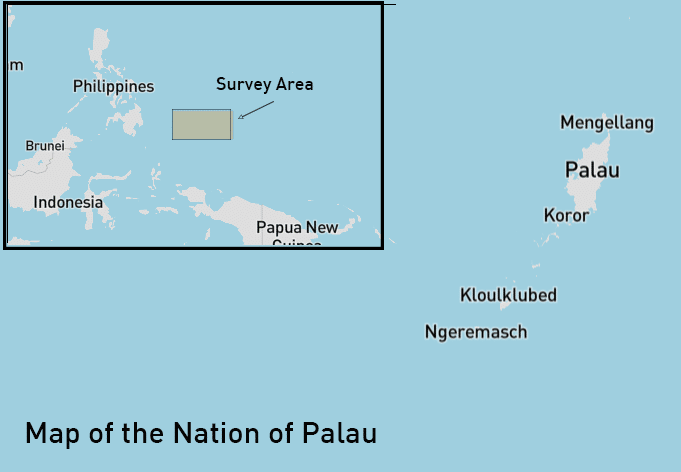
Map of Study Site

Efficacy of Protection and Restoration Measures
The stability of the Palau National Marine Sanctuary (PNMS) is currently under debate. According to reports from Pacific Island Times and Islands Business, the Palau Congress is considering House Bill 11-30-2S, which proposes reducing the strictly protected "no-take zone" from 80% down to 50%. (Islands Business, 2024).
This legislative shift aims to reopen Palau's waters to foreign commercial fishing fleets (longliners and purse seiners) to generate urgent government revenue from tuna exports.This potential rollback highlights the complex struggle Palau faces between maintaining its status as a global conservation leader and meeting its domestic economic needs. If passed, conservationists fear it could tarnish Palau's "pristine" brand, indirectly affecting the eco-tourism revenue that funds reef restoration projects.
While the "super coral" project shows high potential for local restoration, researchers caution that it is not a "silver bullet" (Hodge, 2025). According to the scientists involved, selective breeding can only buy time. If global warming exceeds the critical 2°C threshold, even these heat-resistant strains may not survive. Therefore, the long-term success of these biological interventions is strictly dependent on global efforts to drastically reduce carbon emissions.
Palau’s reefs, and the sustainability of its economy and communities are at a crossroads. Many of the measures being taken within this island nation are world firsts, and could produce tangible and directly observable benefits to its reef ecosystem. However, the efficacy and long term sustainability of these efforts is currently under threat due to competing interests or global factors that are outside the control of the country.

Conclusion
The work being done in Palau serves as a blueprint for the rest of the world. Successful techniques developed here—specifically the propagation of heat-tolerant genetics—are intended to be exported to help restore other deteriorating ecosystems, including Australia's Great Barrier Reef. Supporting organizations like the PICRC is not just about saving Palau's reefs, but about securing a future for coral ecosystems globally.
The reefs of Palau are some of the most pristine, biodiverse, and valuable marine ecosystems of the world. Their continued loss would be catastrophic for not only this small island nation, but for the global community. It is imperative that nations around the world come together to support and provide assistance to the nation in protecting its natural resources. Furthermore, more needs to be done globally to reduce the drivers of climate change that are affecting our planet’s coral reefs.
